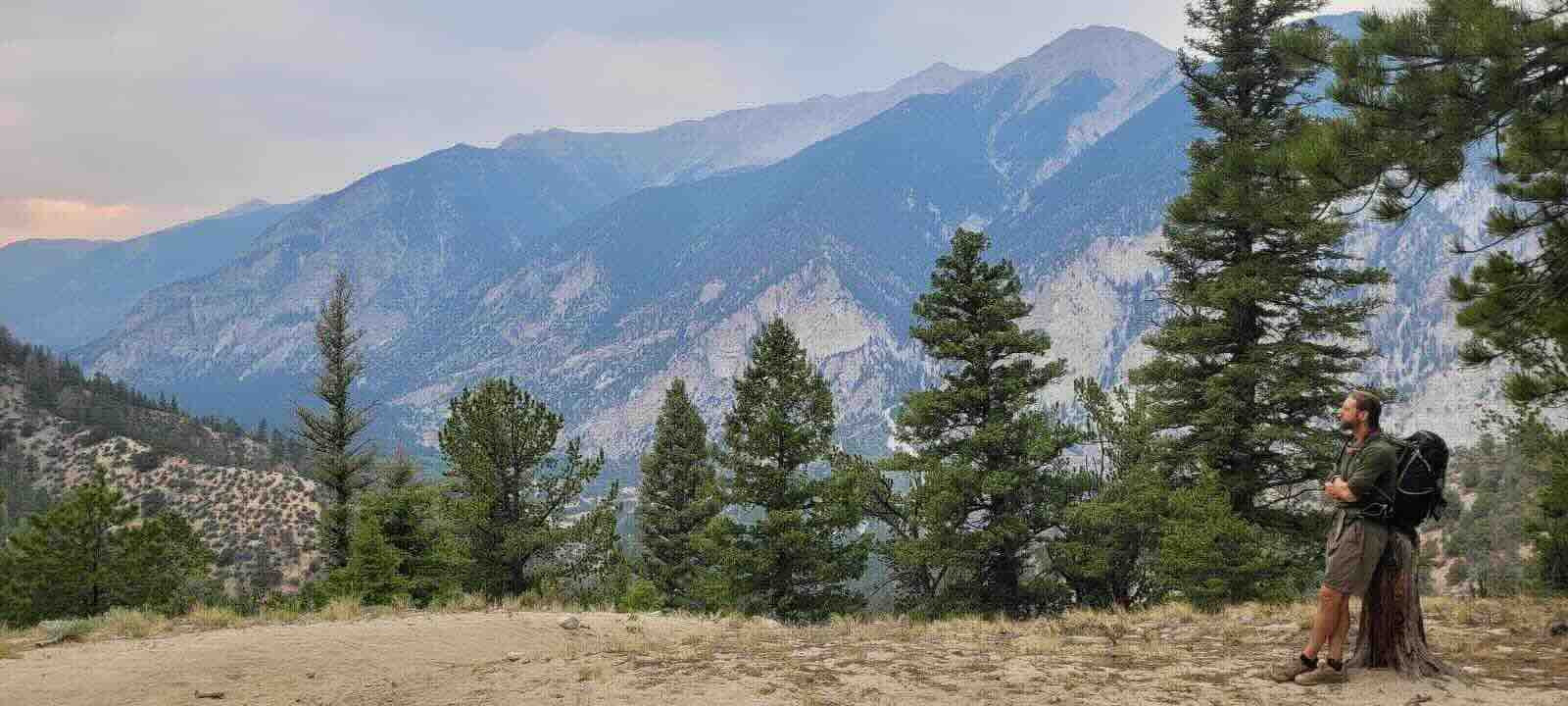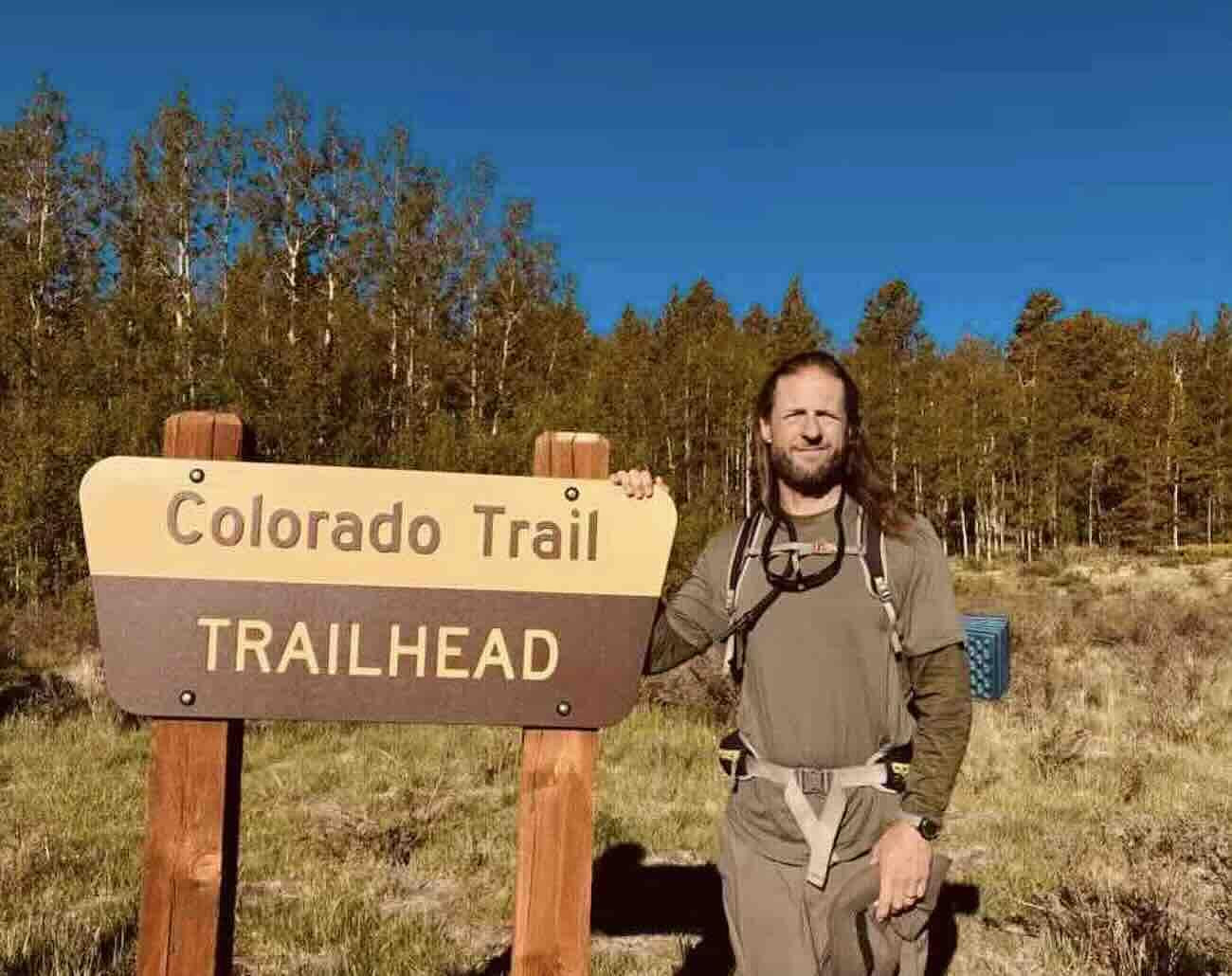
This summer, at age 54, I’ve embarked on a new(er) past-time, hiking half (240 miles) of the Colorado Trail, in 2-4 day installments.  

Superficially, the hike may seem distinct from formal yoga practice. But, as I sometimes share with students: “you can take yoga with you anywhere you breathe, think or move.”

Breath regulation synchronized with steps, nasal breathing, intentionally setting one’s gaze, or unwinding with a few poses after 16 miles of hiking are some possible applications.

And sometimes the deeper ethos of yogic teachings are illustrated by the land itself. One connects to the spirit rather than route methodologies.

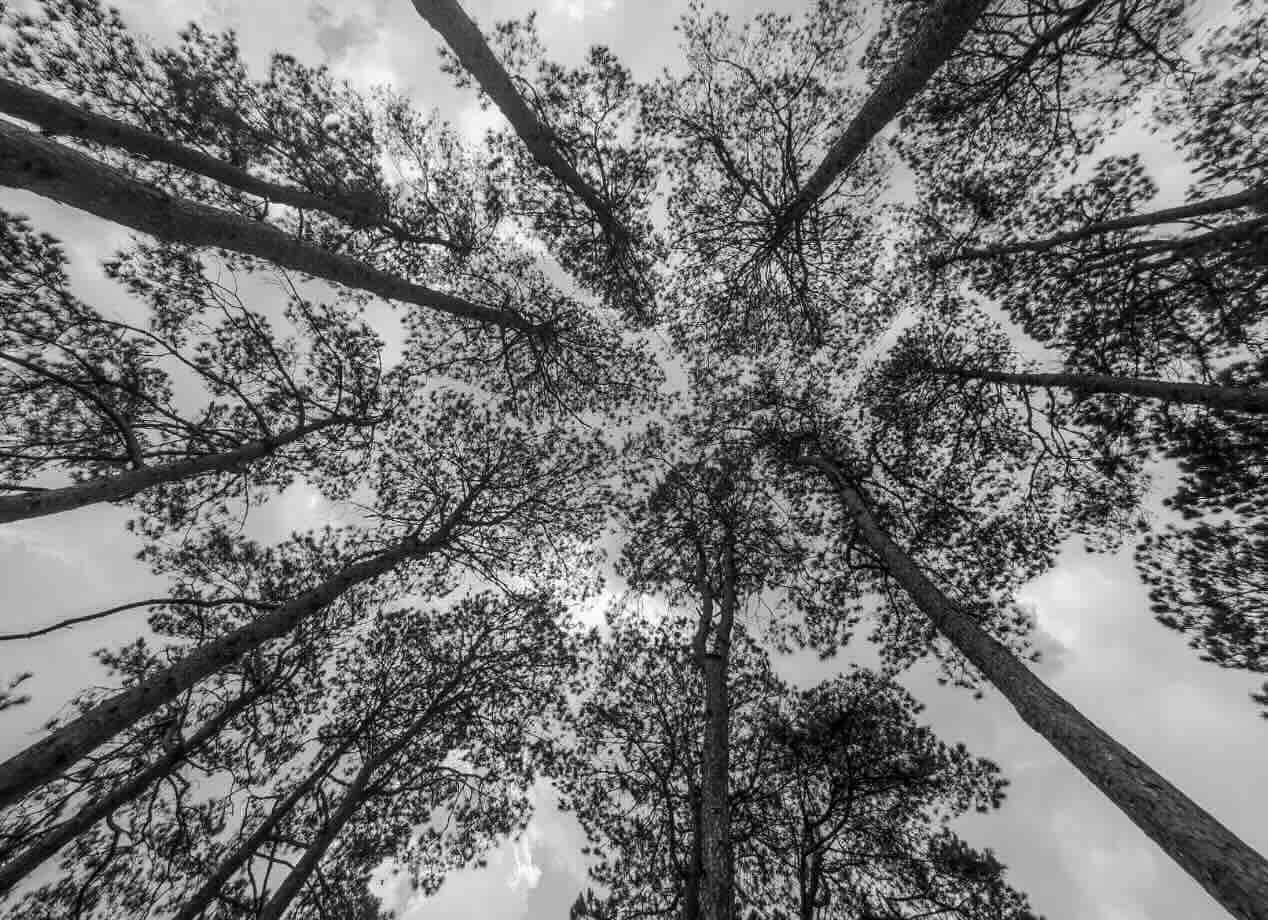
After traversing a particularly difficult  pass, I vividly noticed all the upright, green trees; surrounded by an equal number of brown, horizontal ones. 

Half the forest alive and half of it deceased.

Of course the deceased trees then nourish the soil and enter the bodies of new emergent trees. And so the cycle goes, death is simply an aspect of the greater wheel of life and not a definitive ending.

In other words, death occurs within the greater context of life. 

Life is primary. 

The forest offered no philosophy that day, only a quiet reminder: what appears as an ending is often participation in a larger continuity. Seen this way, practice becomes less about forcing change and more about learning to align with the rhythms that have always sustained us.

I write these pieces from scratch. I bring years of study and a bit of self reflection to the page and try to compose something meaningful in about 200 characters.

There is no limit to knowledge and inspiration, though it seems to have its own pulse and timing, much like everything else in the creation. 

The Muse giv’eth.
The Muse tak’eth.

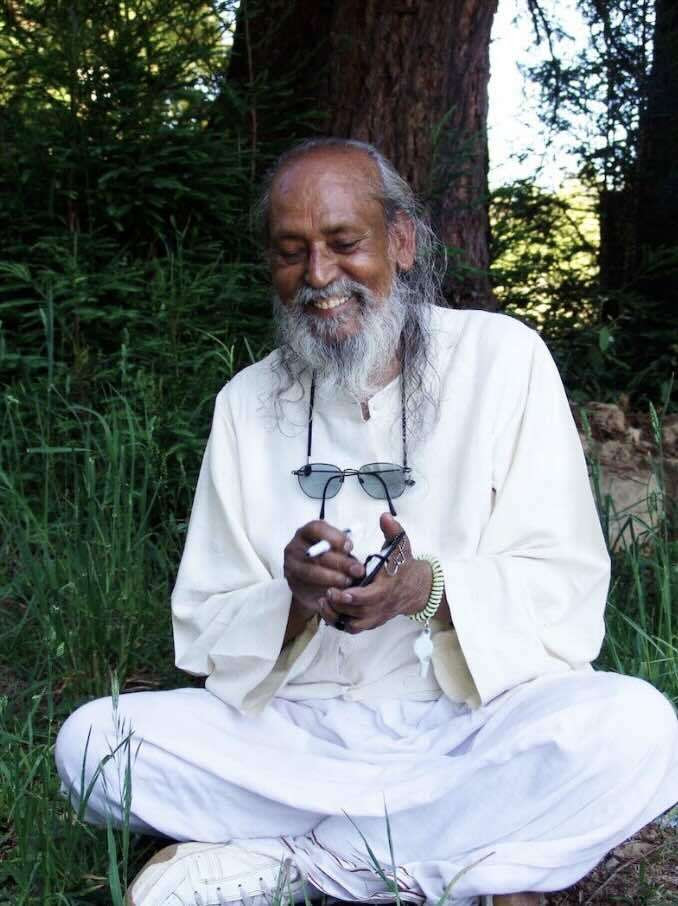
This week (already about 63 characters in, oops, make that 70) I decided to draw a bit of inspiration from my teacher, Baba Hari Dass, a silent monk of over 60 years, who wrote on a chalk board before passing at the age of 96.

The man could convey a great deal in a few words.

I experience relief when I read this. #1 Recognize how much energy is given to posturing a particular identity. #2 It’s a futile way to go about living.

Said a little differently. It’s said that at 18 we concern ourselves with what others may think of us. At 40 we stop caring so much about what they might be thinking. And at 60, we recognize that they were never thinking about us in the first place, the majority of attention was spent managing their own 

veneer. Simply live into the most authentic version of highest nature as you can, amidst the many words and currents of this world.

Amidst the many uncertainties in life I often remind myself to come back to the basics.

And it does not get much more basic than breathing, or so it seems.

Breath is vital to our life-process, and often overlooked – essential nourishment, hidden in plain sight, and presumed to always be there for us. Holding your breath out for 30 seconds will quickly reveal our vital link to breath in astonishing ways.

Yoga teachers often lean heavily on breath-cues, reminding us to “take a big ol’ hit of air” as one teacher professed. 

Rarely do I hear reference to why we should be conscious of our breath; and I summarize some of those reasons below:

  • The breath is the intermediary force between your body & mind.
  • Breath regulation gives us direct access to autonomic (unconscious) aspects of the nervous system.
  • The breath provides a mirror reflection of our thoughts.
  • If you’re anxious you will breathe accordingly, same is true for all other emotions.
  • It is possible to reverse engineer the breath to tranquilize the mind.
  • A calm, smooth breath indicates mental stillness = effortless meditation.

Simple ways that we can improve breathing:

  • Breath through your nose whenever possible.
  • Use sleep tape – video here
  • Practice asana as a means of breath regulation. Breathe first, posture second.
  • Deep abdominal breathing is one of the most effective methods for anxiety regulation.
  • Regular practice of pranayama with trusted guidance

Several decades ago, when I first went to yoga classes, the practice was closely associated with “discipline.” People talked about “discipline” the same way we talk about “flow” or  “trauma sensitivity” now. It was in the air of practice.

Discipline is an essential aspect of what the yogis call “Tapas.” Tapas are the creative friction that arises when going (a bit) against the grain of impulses; it gives rise to generative heat that opens new possibilities and develops one’s character.

However, some habits seem quite stubborn and we may like the idea of “I will meditate every morning” but it remains elusive. I have my own fantasized version of a disciplined-self that does not parallel the reality of my behaviors. Sound familiar?

Here is a rewarding middle option. Practice “micro-disciplines” in the moment. Notice moments in your day when you can choose your higher virtue.

Tending to the fire of transformation is tapas.

Consciously sitting in boredom, rather than distraction is tapas.

Saying “no” can yield tapas.

Sacrifice a bit of comfort in the moment and nudge your way into a more fulfilling direction one small and simple choice at a time.  I invite you to experiment with this in your day to day decisions.

Oftentimes we may enter yoga with the hope of gaining something, such as greater range of motion or peace of mind, often with success.  It is a sensible motivation.

On a deeper level, the yoga process reveals a deeper capacity to accept life as it is, independent of our predeterminations–the ability to sit in loss, gain or grief with greater equanimity–and grow wiser from such experiences.

From this perspective, yoga is a reversal. To reverse the instinct to grasp at externals and deliberately focus on shaping/managing/purifying our perception; the actual epicenter of where life experiences occurs.

It’s not so much that we experience the outside world, as we experience our own energy, in reaction to outer sources of stimulation.  Cultivating our inner capacities–a movement from reaction to response–is a great reversal and gesture towards lasting freedom.

What is your go-to yogic teaching “off the mat”?  

A few come to mind: “patience”, “acceptance”–that’s a big one–or “giving of oneself”, all of which read nice on paper and can be much more difficult to put into practice.

Genuine yoga practice is something we live into rather than something to “do.”  

Layer by layer yoga reveals hidden and not so hidden tendencies and invites to apply the principles of “patience”, “acceptance” and so forth to living circumstances. Asana and so forth are means to a greater end–the maturing of your character.

Overtime, no stone is left unturned.

Baba Hari Dass used to say “climbing is hard and slipping is easy.”  It takes a bit of determination to live into one’s higher virtues.  But the alternative also comes with its price.

So, what is your go-to yoga practice off the mat?

Perhaps you’ve heard Patañjali’s quintessential definition of yoga?

It’s quite simple, and simultaneously vast; two signature features of wisdom.
 

“Yoga is the stilling of all thought.”
 

This definition probably conjures more questions than answers and invites us to reconsider our mental space…. what are thoughts anyway?

On a practical level, I invite us to consider the mutable nature of thought, how it can seem so dense, habituated and convincing at times and simultaneously amorphous, shifting and changing in every moment. 

Who is the “me” beneath these fluctuations?

Patañjali goes on to assert that the mind occupies the surface of our being, vailing yet revealing a pathway to our essential nature. 

Who would we be in the absence of  thoughts and opinions about self and “others”?

How does one still the mind?

What get’s revealed?

More questions….

Sometimes the mental story is caked with adversity and sometimes it is not.  Yoga is the process by which we can come to terms with our particular narratives, create a bit of space, and draw closer to our essential nature.

Blessings of the spring season.

As the grass ripens, and the days breathe with greater length, I reflect upon the spirit of yoga through the seasons. From one perspective, the state of yoga (union) is a perennial constant, utterly merged with the essence of life-itself; an unbridled instrument of infinite consciousness.  Sounds kind of nice, right?

For many, this may seem a bridge too far, and they may be unable to relate to, much less translate such a vast vision into the clunky mechanics of day to day life. Something like a bit more peace would be a welcome start.

Which brings us to a second perspective, yoga as a means for skillfully navigating the varied seasons and contours of your unique life-curriculum.  The diverse toolbox of yogic methodologies can support our circumstances; bodily, mentally, emotionally, spiritually, with holistic grace.

This body of practice can be quite specific in their application, but the most essential guide post could sound something like “get started” followed by “as regularly as you can.” I sometimes dabble a bit of advice on prospective yogis, by saying “the best yoga class is the one that you will go to.”

With continued practice, we may find that all life experiences–desirable and undesirable–are a part of the yogic course of study; accumulating insights that guide one a more complete view of self and the very nature of existence itself.

Namaste May,

Like a swollen river that winds its way through mountains, and across deserts, before emptying into the primal ocean, yoga unfolds over time–leading to our essential origin.

This month, in our weekly Master Class, we turn our attention to the Yoga Sutras of Patanjali, a definitive treatise on the aim and path of yoga; leading to complete freedom.

Sounds nice, right!?

The text starts with a declarative assertion: “atha-yoga-nushasanam” or, “Now the study of Yoga.”

Screenshot

The first word, “atha”, means now. Indicating a possible monumental build up of  life experiences that have led to this moment.  Now, we are in a position to take up the study.

Atha also connotes that we will commence our study, a movement towards future study.

And finally, Atha also signals the eternal present. As in NOW. Yoga study is a total embrace of the perennial-immediacy that touches all of life; past, future and present.

One who awakens to the very first word of the very first yoga sutra can simply lay the rest of the text to rest. And for those who may struggle with present moment freedom, there is more to unpack.

We invite you to join in our study of the phenomenal book of wisdom.

It’s been an eventful April at DYU. And I wanted to recap a few lessons and experiences….

We hosted the spring cleanse and were met with many repeat members; a growing bi-annual tribe dedicated to cleansing mind-body-soul. Their final shares at the closing potluck, glowed with warm sparks of humor and honesty.

Jeremy Wolf joined us and shared his Level II Yoga Nidra Training. I got to participate as a student. I appreciated his recurrent message of the accessibility of the witness perspective, and simple reminders of the entanglement that occurs at other times.

This month’s Master Class featured an experiential immersion into Mantra–a new topic of presentation for me. Briefly, sound is alive, it conveys powerful messages and can shape unique destinies; beginning with the messages we tell ourselves on a regular basis.

What’s more, we collaborate with our friends at the Denver Yoga Summit for a free peep-rally class in support of their upcoming fall summit. There, we were reminded of Aim as a directing force in our practice, to help guide decisions in daily life.